



Parasite
Antiparasitics are a class of medications which are indicated for the treatment of parasitic diseases such as nematodes, cestodes, trematodes, and infectious protozoa.
Parasite Isoform Specific Products
All Product Categories
-
Parasite Related Products (2510)
Related Products (2510)

-
Related Compound Screening Libraries (1)
-
Parasite Isoform Comparison
-
Girinimbine
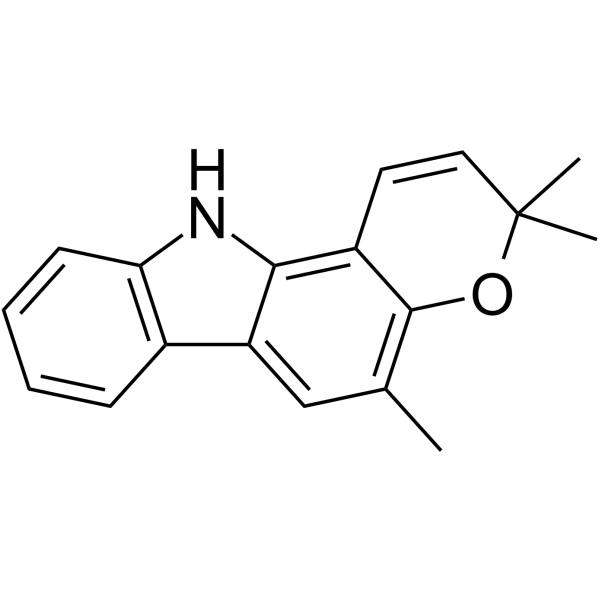 0 ImagesSynonyms: GirinimbinGirinimbine (Girinimbin) is a carbazole alkaloid with a variety of biological effects. Girinimbine can induce apoptosis, and has antitrypanosomal, antiplatelet activity, antibacterial activity, anti-inflammatory, antioxidant and antitumor activities.
-
Antimalarial agent 33
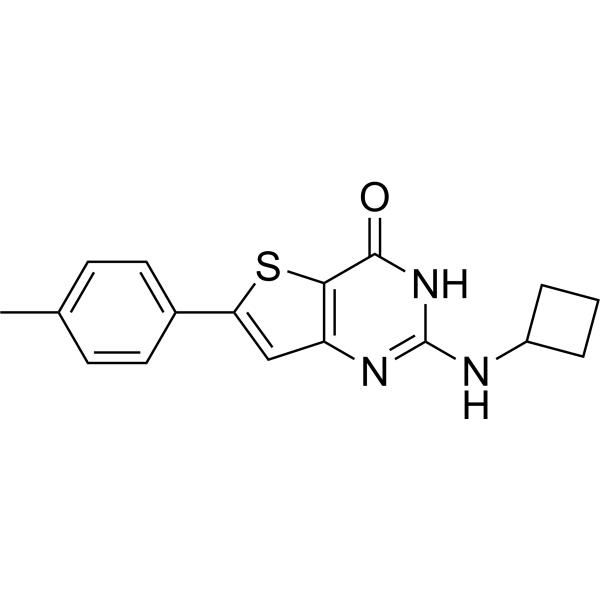 0 ImagesAntimalarial agent 33 (compound 5g) has antiplasmodial activity against erythrocytic and hepatic stages of Plasmodium with an EC50 of 1.1 μM for K1 P. falciparum strain. Antimalarial agent 33 demonstrats enhanced microsomal stability (T1/2=29 min). Antimalarial agent 33 has no significant cytotoxicity against primary hepatocytes.
-
Chloroquine-d4 phosphate
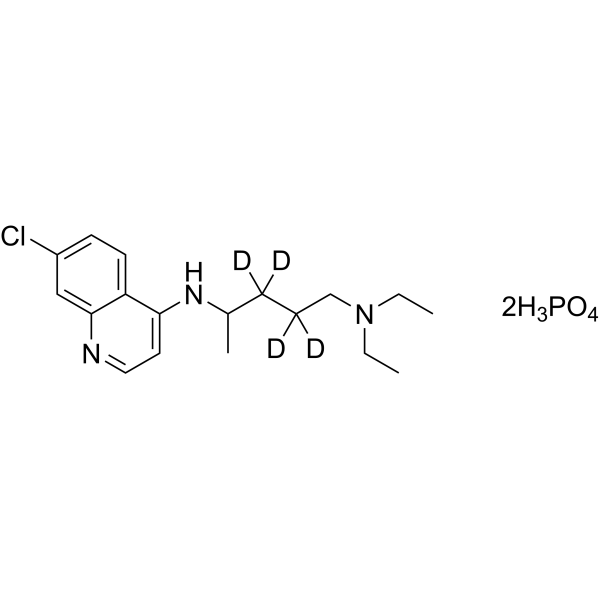 0 ImagesCat. No.: HY-17589S1Chloroquine-d4 (phosphate) is the deuterium labeled Chloroquine phosphate. Chloroquine phosphate is an antimalarial and anti-inflammatory agent widely used to treat malaria and rheumatoid arthritis. Chloroquine phosphate is an autophagy and toll-like receptors (TLRs) inhibitor. Chloroquine phosphate is highly effective in the control of SARS-CoV-2 (COVID-19) infection in vitro (EC50=1.13 μM).
-
Palmatine
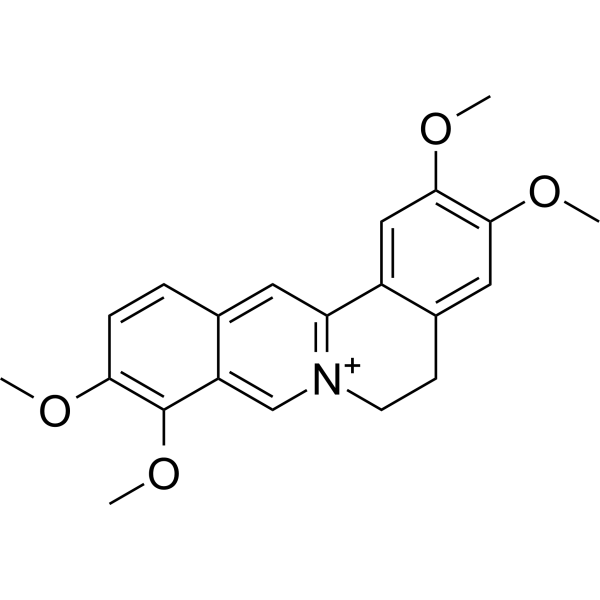 0 ImagesPalmatine is an orally active and irreversible indoleamine 2,3-dioxygenase 1 (IDO-1) inhibitor with IC50s of 3 μM and 157μM against HEK 293-hIDO-1 and rhIDO-1, respectively. Palmatine can also inhibit West Nile virus (WNV) NS2B-NS3 protease in an uncompetitive manner with an IC50 of 96 μM. Palmatine shows anti-cancer, anti-oxidation, anti-inflammatory, neuroprotection, antibacterial, anti-viral activities.
-
T-Cadinol
 0 ImagesT-Cadinol is a sesquiterpene isolated from C. sylvestris that exhibits anti-Trypanosoma cruzi activity, with IC50 values of 18.2 μM and 15.8 μM against trypomastigote and amastigote forms, respectively. T-Cadinol can induce mitochondrial damage in parasites, leading to membrane hyperpolarization and decreased levels of reactive oxygen species. T-Cadinol can be used for the research of Chagas disease.
-
Ethopabate
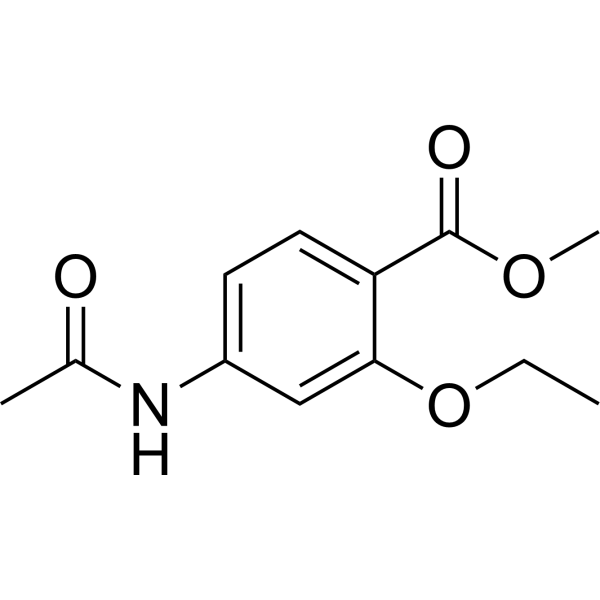 0 ImagesEthopabate (Ethyl pabate) is an orally active antiparasitic agent. Ethopabate is often used in combination with Amprolium hydrochloride (HY-B0937A) and others to prevent and treat poultry coccidiosis, leucosis, and other diseases.
-
Lufenuron (Standard)
 0 ImagesLufenuron (Standard) is the analytical standard of Lufenuron. This product is intended for research and analytical applications. Lufenuron is a lipophilic benzoylurea insecticide and a chitin synthesis inhibitor that can used for flea and fish lice control. Lufenuron inhibits moulting of arthropods.
-
trans,trans-Dibenzylideneacetone
 0 ImagesSynonyms: (E,E)-Dibenzylideneacetone; trans,trans-Dibenzalacetonetrans,trans-Dibenzylideneacetone ((E,E)-Dibenzylideneacetone) (compound A1) is a dibenzylideneacetone with a week antimalarial activity. trans,trans-Dibenzylideneacetone inhibits P. falciparum 3D7 strain with an IC50 of 213.41 μM.
-
Limonianin
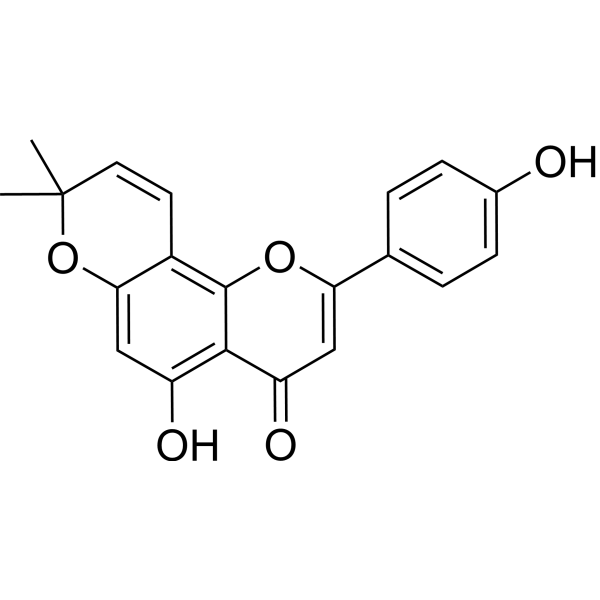 0 ImagesCat. No.: HY-N2906CAS No.: 119309-02-3Synonyms: AtalantoflavoneLimonianin (Atalantoflavone) is a flavone, that can be isolated from Erythrina sigmoidea and the root bark of Citrus limonia. Limonianin presents inhibitory effect against P. gingivalis. Limonianin shows cytotoxic activity against multidrug-resistant (MDR) cancer cell lines.
-
Ibuprofen-13C6
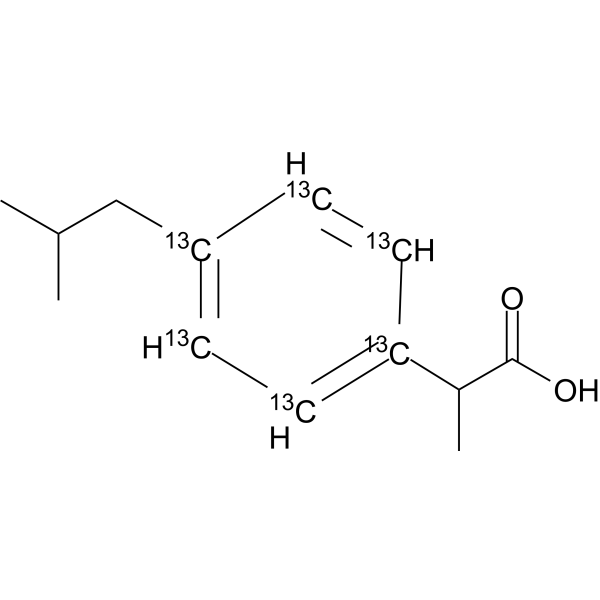 0 ImagesCat. No.: HY-78131S3CAS No.: 1216459-54-9Synonyms: (±)-Ibuprofen-13C6Ibuprofen-13C6 ((±)-Ibuprofen-13C6) is a 13C labeled Ibuprofen (HY-78131). Ibuprofen ((±)-Ibuprofen) is a potent, orally active, selective COX-1 inhibitor with an IC50 value of 13 μM. Ibuprofen inhibits cell proliferation, angiogenesis, and induces cell apoptosis. Ibuprofen is a nonsteroidal anti-inflammatory agent and a nitric oxide (NO) donor. Ibuprofen ((±)-Ibuprofen) can be used in the research of pain, swelling, inflammation, infection, immunology, cancers.
-
7-Deazaguanosine
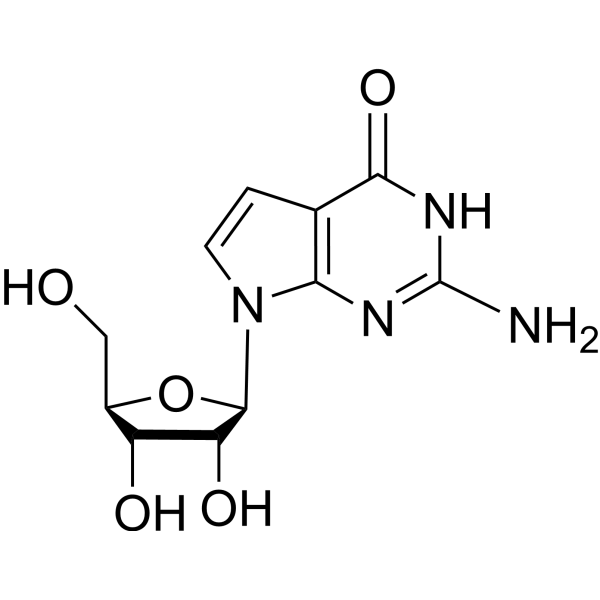 0 Images7-Deazaguanosine is a purine nucleoside analogue with antitrypanosomal activity.
-
Dapsone-d8
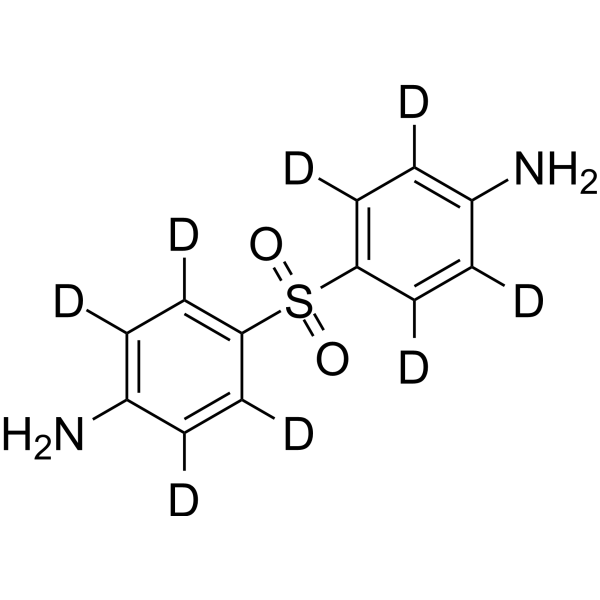 0 ImagesSynonyms: 4,4′-Diaminodiphenyl sulfone-d8; DDS-d8Dapsone-d8 is a deuterium labeled Dapsone. Dapsone is an orally active and blood-brain penetrant sulfonamide antibiotic with antibacterial, antigenic and anti-inflammatory activities. Dapsone?exerts effective antileprosy activity?and inhibits folate synthesis in cell extracts of?M. leprae. Dapsone can be used as an anticonvulsant and also in the research of skin and glioblastoma diseases.
-
Warangalone
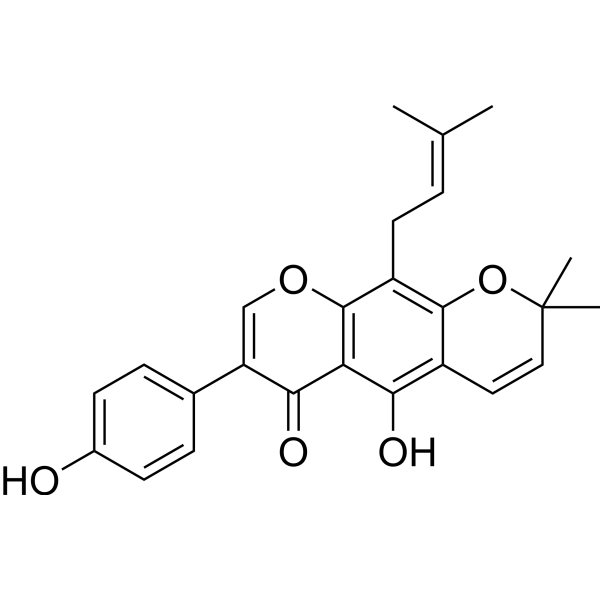 0 ImagesWarangalone is an anti-malarial compound which can inhibit the growth of both strains of parasite 3D7 (chloroquine sensitive) and K1 (chloroquine resistant) with IC50s of 4.8 μg/mL and 3.7 μg/mL, respectively. Warangalone can also inhibit cyclic AMP-dependent protein kinase catalytic subunit (cAK) with an IC50 of 3.5 μM.
-
N-Methyl lactam
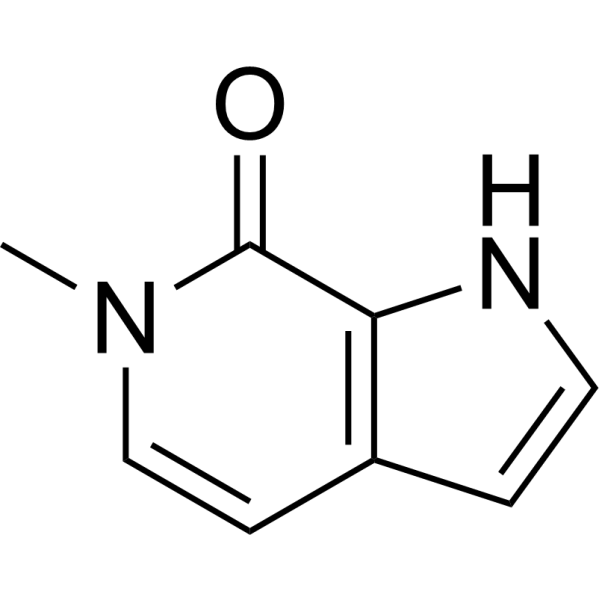 0 ImagesCat. No.: HY-W054223CAS No.: 116212-46-5N-Methyl lactam (Compound 3b), a peramiue analogue, has feeding-deterrent activity against adult weevils.
-
Pyronaridine
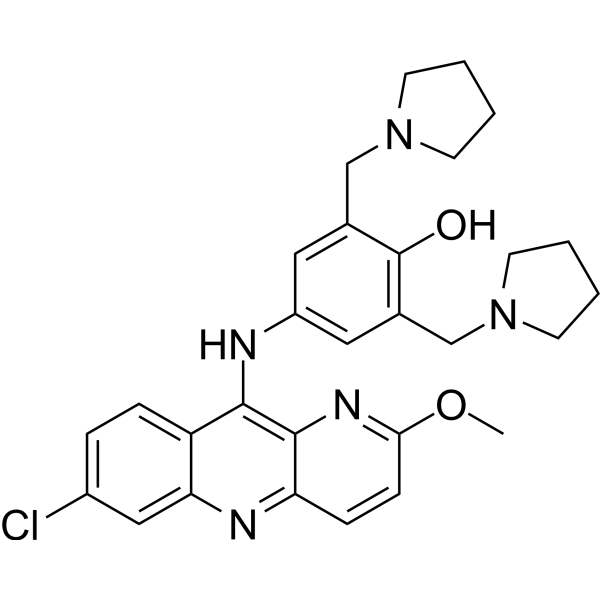 0 ImagesCat. No.: HY-14749CAS No.: 74847-35-1Pyronaridine is an orally active Mannich base anti-malarial agent. Pyronaridine is active against P. falciparum and Echinococcus granulosus infection.
-
Benzimidazole (Standard)
 0 ImagesBenzimidazole (Standard) is the analytical standard of Benzimidazole. This product is intended for research and analytical applications. Benzimidazole is a biochemical reagent that can be used as a biological material or organic compound for life science related research.
-
(+)-Neomenthol
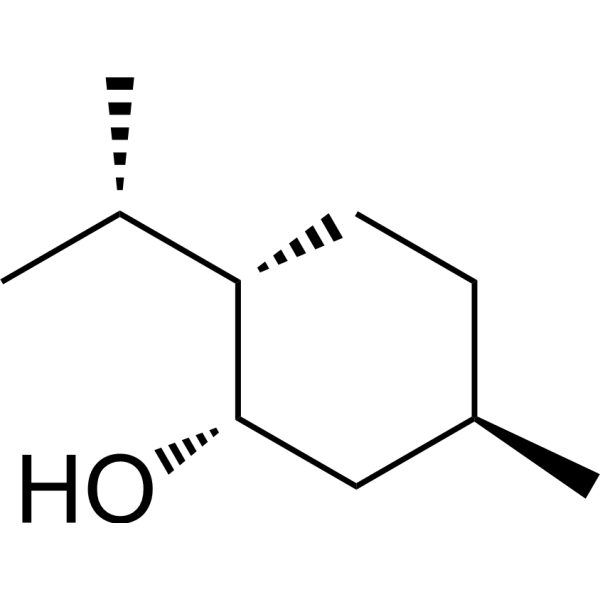 0 ImagesCat. No.: HY-135286ACAS No.: 2216-52-6(+)-Neomenthol is a potent miticide. (+)-Neomenthol shows acaricidal activitie with LD50 values of 0.32, 0.256 µg/mL for Dermatophagoides farinae and Dermatophagoides pteronyssinus, respectively.
-
S-Methyl thioacetate
 0 ImagesCat. No.: HY-W102349CAS No.: 1534-08-3S-Methyl thioacetate is a toxicant with fumigant activity, can be found in emissions from Bacillus oshimensis, Burkholderia gladioli, Burkholderia cepacia, and Pseudomonas oryzihabitans. S-Methyl thioacetate exerts fumigant toxicity against Caenorhabditis elegans and root-knot nematode Meloidogyne incognita. S-Methyl thioacetate functions as a bacterial volatile organic compound. S-Methyl thioacetate can be used for the research of plant-parasitic nematode infection.
-
Fluacrypyrim
 0 ImagesCat. No.: HY-W414644CAS No.: 229977-93-9Fluacrypyrim, a Miticide, is a STAT3 inhibitor. Fluacrypyrim significantly increases the protein tyrosine phosphatases(PTPs) activity. Fluacrypyrim inhibits the growth of leukemia cells by a predominant G1 arrest with significant decrease of the protein and mRNA levels of cyclin D1. Fluacrypyrim selectively inhibits STAT3 signaling, inducing growth arrest and apoptosis in STAT3-dependent cancer cells. Fluacrypyrim mitigates IR-induced hematopoietic system injury mainly by preventing apoptosis in the HSCs. Fluacrypyrim demonstrates significant analgesic and anti-inflammatory effects by inhibiting uterine smooth muscle contraction and inflammatory responses.



